A Day In the Life

Back to School 101: Navigating the Hallway

By Douglas P Perkins (Own work) via Wikimedia Commons

School is in full swing here, and, I imagine, everywhere else. For some of us, going back to school has become routine, whether it’s our fourteenth year or our fourth. For some of us, this may be an entirely new experience. Regardless of what year of teaching this is for you, the beginning of the school year can come with a lot of adjustments, road blocks, and awkward moments. Lucky for you, I’m here with some lifesaving tips on how to avoid some very awkward moments. More specifically, how to avoid those awkward moments while Navigating the Hallway [cue ominous echoing sound effect].

I’m not talking about how to crowd surf your way through the corridors of your school while avoiding the aromatic mosh pits of hormone addled tweens and teens. No, I’m talking about how to survive those uncomfortable moments when you’re strolling down a presumably empty hallway and encounter Another Adult [cue dun dun dun sound effect]. You may be one of those super outgoing, socially capable, gets-along-with-everyone types, and good for you. This post isn’t for you. This post is for those of us who sweat a little when put on the spot, those of us who stutter when speaking in front of adults, and those of us who carefully craft routes through the school to avoid any troublesome encounters. Maybe you’re one of those art teachers who is never in the hallway, aside from when you arrive and exit the building. Good for you. This post isn’t for you either. This post is for those of us who have to pee nine times a day, those of us who travel to the other side of the building to access our supply closets, and, those of us who, for whatever reason, just find ourselves in the hallway during the middle of the day.
Shall we get to it?

Art Teachers Hate Glitter’s Guide to Navigating the Hallway
It’s inevitable. At some point in your career, you’re going to find yourself waking down a hallway. Odds are, while you’re walking down this hallway, you’re going to encounter another human being. Not just another human being, but another adult human being. These encounters usually warrant some sort of human interaction. If you’re lucky, it’s the beginning of the day and a simple, “Good morning. How are you?” should suffice. Even if it’s the middle of the day you can get by with a, “Hey. How’s it going? Thank goodness the day’s almost over, huh?” The end of the day is safe too, what with idle chatter like, “How’d your day go? See you tomorrow,” and, “Thank god that’s over. Have a good night!” at your disposal. But if the gods are against you, then the chances are good that you’ll be running into the same person every time you leave your room. In this case, that stockpile of flippant chit chat isn’t going to cut it. There’s only so many times you can ask someone how their day is going before it gets old. Trust me. Here’s how I recommend you deal with these situations.
Avoid Eye Contact
It’s best not to look the other person in the eye. Always keep your head down while walking. Count the tiles. Take note of the interesting textures of the floor. Admire your freshly polished toesies. Whatever you do, don’t look up. Once you make eye contact with the other adult, you’re obligated to interact with them. I understand, in some cases, avoiding eye contact is easier said than done. Maybe you’re happily jaunting down the hallway, reveling in its quiet emptiness, you round the corner, and shit! You’ve unwittingly locked eyes with another adult at the end of the hall. Now what?
Bring A Prop
Always, always, always bring a prop whenever you leave the sanctity of your art room. This way, after the obligatory head nod, you can look away and focus on your prop. This is totally acceptable. Be aware though, it is important to choose your prop wisely. A clipboard of papers is the perfect prop. You can study it intently without the fear of interruption. Obviously it’s important that you get this information right now. Other teachers understand this. Our days are busy. We multitask.
Art supplies are good too. No one’s going to engage you in conversation when you’re carrying a bucket of dirty paintbrushes or a teetering tower of glazes, lest you ask them for help. Non art teachers hate touching icky art supplies. That’s a fact. Why do you think they’re always sending students to your room in search of pom poms and paint?
Student artwork is a gray area. Yes, transporting student artwork requires your undivided attention, thus rendering you incapable of small talk, however, you may be forced into conversation anyways. The other adult might actually ask you about the work. Don’t hold this against them; they’re just trying to survive the awkwardness of the hallway encounter too. Thankfully, should you be questioned about the work, you have now been provided with the perfect opening to engage the other adult in a conversation about clay techniques and why scoring and welding are so crucial. But what happens if you left your room and forgot to bring your prop?
Grab A Student
The hallways are very attractive to students. Students can’t resist the alluring call of an empty hallway. A student is bound to wander into your path and save the day. When one does, engage the student in greetings and conversation. Once the other adult has passed, you’re now free to continue on your merry way. But what’s that? You’re patiently waiting for a student to appear, but there are none in sight, and you’re beginning to panic? Stay calm. With some quick thinking you can come up with an excuse to pop into the closest classroom and “borrow” a student. Don’t worry, other teachers do this all the time. Now you can safely converse with the student while the other adult passes by. But what happens when you’re traversing the one hallway with no students or classrooms in sight?
Use Humor
I’m not asking you to make jokes. Heaven knows that isn’t going to go well for anyone. If you have no other options available you’re going to have to put yourself out there and provide some comedic relief. Trip. Stumble up the stairs (stairwells are just an extension of a hallway). Lose a shoe. Pass gas. Whatever route you choose, you both can laugh about your gaffe and move on with a smile. And bonus! Now you have something to talk about the next time you run into each other, “Hey, remember that time I let one rip? That was a doozy, huh? Guess I better cut back on the ole fiber, eh?” Please note, this follow-up scenario is only good for one encounter. Using it more than once is just sad.
Regardless of how you choose to survive the hallway encounter, remember, if you can’t think of anything pertinent, and semi-intelligent to say, Don’t. Say. Anything. At. All. A poorly constructed sentence of incoherent and disconnected words can only make things worse. You want to leave the other adult feeling good about your meetup and not wondering, “Is she on medication?”
Standard
Product Reviews

A Few of My Favorite Things: Classroom Must-Haves

(I totally meant to have this posted a few weeks ago, long before returning to school, and certainly still in August, as the opening line suggests. However, between birthdays, a going away get together, play dates, a wedding and a root canal, it just didn’t happen.)
It’s August September. Which means it’s time to start preparing to return to school (I realize some of you all of us are already back in the swing of things). Just for fun, I thought I would gather together a collection of some of my favorite things. All of the items below are things that I use in my classroom, or at home. (At this point I will note, I have not been compensated in any way for this post.)

1. Time Timer

I love, love, love this timer. I was first introduced to it through The Art of Education when they were hosting a giveaway about a year ago. I didn’t win the giveaway, but I loved the idea of this timer so much that I purchased one for my classroom. This is probably one of the best classroom purchases I’ve ever made. I set it at the start of class (and if I don’t remember, my students are eager to remind me), and it allows students to monitor class time on their own, without having to ask how much time they have left.
This timer is a great classroom management tool. I often overhear students telling each other, “Shhh. You’re wasting our art time. Look at the red!” It also helps with clean-up, because the students know that when the red gets to “5” (or “10”, depending on the materials we’re using), it’s time to stop working and clean-up. And bonus, I no longer have to watch the clock and remember what time the students came in, and what time they’re leaving (this is especially good if you work at multiple schools with different start times.)

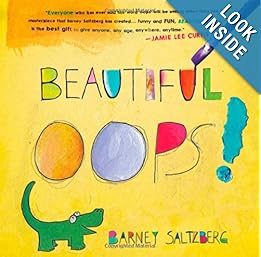
A couple of years ago, when I was out on maternity leave, my fabulous sub read this book at the start of the school year. I hadn’t previously heard of it, but I was so grateful to her for having read it to my students. For the rest of the year, anytime students made a “mistake,” their peers were quick to remind them that they could turn it into a beautiful oops. Unfortunately, when my sub left, she took the book with her, but I was sure to pick up my own copy for my classroom.
For more art room books must-haves, check out this list from The Art of Education.

3. Etch A Sketch

Remember these? I picked a couple Etch A Sketches up years ago at TJMaxx for my classroom (one of them has since been stolen). I was shocked by what a hit these were. Students who aren’t normally into art love drawing on these. There is always a fight over the one Etch A Sketch in my classroom, which is why I used some PTO funds to purchase some more this year. If you can, you should definitely get a couple of these. They make great “I’m finished!” activities. You’ll be amazed by what the students can produce. I once had an elementary student who was capable of very accurately replicating buildings in the community on an Etch A Sketch. Without the aid of a photo. In under 20 minutes. Needless to say, his peers and I were blown away. In fact, his mom informed me that an Etch A Sketch was the only thing he had asked for for Christmas. 
Want to see some amazing Etch A Sketch artwork? Check out this artist, Bryan Etch (I know this artist, and I can tell you from personal experience that he throws some fab parties).
Not to be confused with teacher pens. I know some of you don’t mind sharing pencils with the students, and you probably think it’s just easier that way. Good for you. I need my own pencils (hello, germs!), and I need them to be easily identifiable as mine. I picked up this set from Anthropologie, but you can find funky pencils anywhere. Or make your own. I half expected my special pencils to go walking, but I was pleasantly surprised when they never did. In fact, I only went through two of these last year! How awesome is that? Anytime I misplaced my pencil, or left it on a table, students were very quick to return it to me. I make a big deal about never starting class without my pencil, so my students are always helping me keep track of it.
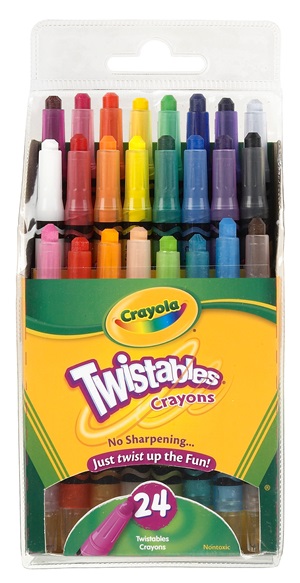
I don’t actually use these in my classroom, but I’m thinking about it. We have these at home, and they are great for my two-year old. She is intense when it comes to crayons with paper wrappers. She will sit there and peel off every little bit of paper from her crayons. And if she can’t get the paper off, guess who gets stuck doing it? I picked up a pack of Twistables for a long car trip, and I haven’t looked back. No more peeling paper!

So there you have it. A few of my favorite classroom items. What are your must-haves in your classroom? Are there any products that you just can’t live without?

Standard
In the Art Room

5 Things I Learned While "Attending" the AOE 2013 Online Conference

Today I “attended” the Art of Education’s 2013 Online Conference. I use the word attend loosely because, well, it’s not like I had to go anywhere. This was my first ever conference; the content was great, the presenters were stellar, and the folks over at AOE definitely deserve some mad props. I “took home” a lot of great content from the conference, but I also, inadvertently, learned, or was reminded of, some other things while participating in the conference.
1. My art room is boring.
This is something I more or less already knew, but guys, my art room is dull. Some of the presenters filmed their videos in their classrooms, and man, what fun looking places! In my defense, a lot of outside factors have contributed to my boring art room, but ultimately, the blame rests on me. Time to step things up. Fingers crossed, here’s hoping I’ll be in a bigger room next year.
2. I can’t sit still for long periods of time.
And by “long periods of time,” I mean an hour. This is one of the reasons teaching art appeals to me. I’ve had other jobs in other fields, and I’ve always done my best in an environment where a lot of change is occurring and there is a high level of energy. Sitting in front of a computer for extended periods of time just doesn’t work for me. I also do poorly in staff meetings and other professional development presentations and classes. Thank goodness the content is available for attendees online. It’s good to know I can go back and view what I missed at my pace.
3. My attention span is nearly nonexistent.
While attending the conference, I was also folding laundry, eating lunch, catching up on episodes of Fringe, window shopping online, and reapplying for my current job. And that was only during the first hour.
4. I need to become more involved.
I feel like I’ve been slacking when it comes to my level of involvement within the art education community. I need to put myself out there more. Humor blogging is one thing, but I was very inspired by the presenters, and I realized that I want to expand my involvement in our profession. Now, how do I go about doing this?
5. Students (and parents) are capable of more than I give them credit for.
A lot of you have your students and parent volunteers tackle tasks that you just don’t have time for. I’ve been meaning to put more content up online or create an online gallery, but have never had the time. Why not have a parent do it? I was very inspired by some of the presenters who used students in demonstration videos. I could have students photograph artwork for online galleries. I could have older students create samples for lessons for the younger students. The possibilities are endless. And here I thought students were only good for pencil sharpening and chair stacking.

What did you “take home” from the AOE 2013 Online Conference?
Standard
A Day In the Life, Gripes

It’s All Fun and Games, Until Someone Pulls the Love Card

Twice a year, I bust out a popular boxed drawing game to play with my students. The last week of school happens to be one of the times I bring this game out. The students love it, I get a kick out of it, and good fun is had by all. Until this week. If you follow Art Teachers Hate Glitter on Facebook, then you’ve already heard part of the story. Here’s what I posted earlier this evening:

For Your Consideration: It’s the last day of art and you’re playing a Pictionary-esque game with your AP 3rd grade class. You pull a subject card that reads, “Gym teachers in love.” Do you,

a) think it’s silly and let your students draw it because it’s all in good fun and they’ll get a kick out of it, or

b) think it’s inappropriate and controversial and banish it to the back of the box?

The responses were essentially divided into two camps, what’s-the-big-deal, and why-poke-the-bear, which is exactly what I expected. As you can probably expect, there’s more to the story than the small little blurb I posted to Facebook.

I play a modified version of the Pictionary-style game, (affiliate) Luck of the Draw, with my 3rd-6th graders. The students are given a subject, which I read from a card I’ve pulled out of the “subject” box (pre-selected for comprehension and maximum humor). They then have a minute to draw the subject. After the minute, the drawings are shared with their table anonymously (or as anonymously as elementary students can be). The students then vote for the drawing that they feel best fits a selected category card. It’s silly, it’s fun, and students of all artistic abilities have a chance of getting their drawings selected as a “winner”. For the last round of the game, I like to select a really fun subject that will get the students roaring with laughter. Sometimes it’s “hamsters juggling,” sometimes it’s “a moose in the house,” and sometimes, it’s “gym teachers in love.”

Until this week, it never occurred to me that “gym teachers in love” was an inappropriate or controversial subject to give students to draw. The response to this subject has always been giggles, mixed with some “ews” and drawings that show two adults with hearts over their heads. Well, for the first time ever, a student took this somewhere it shouldn’t have gone. Somewhere I never expected a third grader to take it, and in surprisingly shocking detail. It was a big deal. Administration and counselors got involved. It was ugly.

I later approached the AP who handled this situation to find out how things had ended. The whole thing had been very emotional, I was actually very upset by the ordeal, and I wanted to make sure that the student was okay. Little did I know, but I was about to be thrown under the bus.

It was suggested that I was to blame for why the drawing was made, which, okay, had I not chosen that subject, the picture never would have happened. Fair enough, but in my mind, there was a bigger issue at hand.

Why is a third grader drawing such detailed images that are not developmentally appropriate for his age?

It quickly became evident that I was the only one who felt that this was the most pressing concern. It was suggested that the subject I asked the students to draw was inappropriate because of everything kids see on TV nowadays. Apparently “love,” something that we teach our children about since the day they are born, something that is interwoven into many human relationships, is a rated R topic. You know, because that’s what kids see on TV, that ever present instigator and fall-guy for every bad thing anyone anywhere has ever done*.

It was implied that the subject was controversial because gym teachers are often accused of doing bad things. Hold the phone. So, if the subject had been “science teachers in love,” or “music teachers in love,” that would have been okay? So, because the subject was specifically about gym teachers, in love, that automatically pushes it into unsafe territory? Why, because gym teachers are evil and dangerous? What, are gym teachers not allowed to be in love? What if it had just been “gym teachers”? Or “in love”? What if I had asked students to draw “love”? Would that be wrong too?

Since when has “love” become an inappropriate and controversial thing to talk about and ask our students to consider in their art work? I ask students to draw family portraits. Is this inappropriate because bad things often happen in families? I ask students to draw pictures of themselves with a friend. We discuss relationships and body language and how you can tell that two people are friends just by looking at them. Kids draw themselves with their arms around their friends. They draw themselves holding hands. Is this inappropriate?

I’m still confused by the backlash that occurred because of this one drawing that this one student drew. I’m shocked that anyone would suggest that I’m asking my students to do inappropriate things. I’m amazed that the focus has been turned around on me and taken away from the student who could really use some attention and help.

I think I just got my first real taste of the anti-teacher vibe that exists now. If this is truly the state of education, that teachers are blamed for the actions of their students, then I don’t know if I want to be a part of that anymore.

What are your thoughts?

*It’s interesting to note that while I wrote this, the TV was on and a commercial came on about Love. The commercial showed many different demonstrations of people showing love for each other, and it was all rated G. Or maybe hugging and kissing children and grandparents is PG? R? I just don’t know anymore.

Standard
A Day In the Life

The Beginning of the Year vs. The End of the Year

We’re approaching the most wonderful time in the school year. That time we’ve been looking forward to ever since we walked through the doors back in August/September. Yup, that’s right, the end of the school year. That glorious time of the year when students and teachers alike come to the mutual, unspoken agreement that no one gives a f* anymore, so let’s let it all hang out.
Don’t pretend like you don’t know what I’m talking about. You know. Oh yes, you. know. A lot has happened this year. You’ve dealt with a lot this year. You’re feeling the weariness. The exhaustion. The effects of being beat down by administration, colleagues, parents and students. And ultimately, things… have… changed from the start of the school year to the end. 
Let’s compare, shall we?

(Tip: Open the image below in a new tab and you’ll be able to zoom in)

What do you think? Are you ready for The End of the School Year yet?
Standard